Rust-powered compositor with Aqua-style blur & glass
Home LinX OS Oxyde Desktop Downloads Retro Links About
Overview

Oxyde is a lightweight desktop environment and compositor designed to bring back the playful early-2000s look—Aqua chrome, subtle gloss, tasteful blur—without the bloat. The guiding target is a full desktop footprint under 1 GB of RAM, even with animations and glass effects enabled.

  • Rust core for safety & performance
  • Responsive animations, gentle shadows, frosted panels
  • Classic ergonomics: Win key opens the app drawer
  • Purpose-built taskbar and file manager (C/C++ for retro flavor)

Oxyde is open source: Oxyde Y2k

Key Features
  • Aqua-glass UI: stacked gradients and soft bevels for an authentic 2003 feel.
  • Snappy compositor: tuned frame pacing and efficient blur passes.
  • Light by design: minimal background services, careful memory budgets.
  • Retro-first UX: large click targets, keyboard nav, classic context menus.
Screenshots

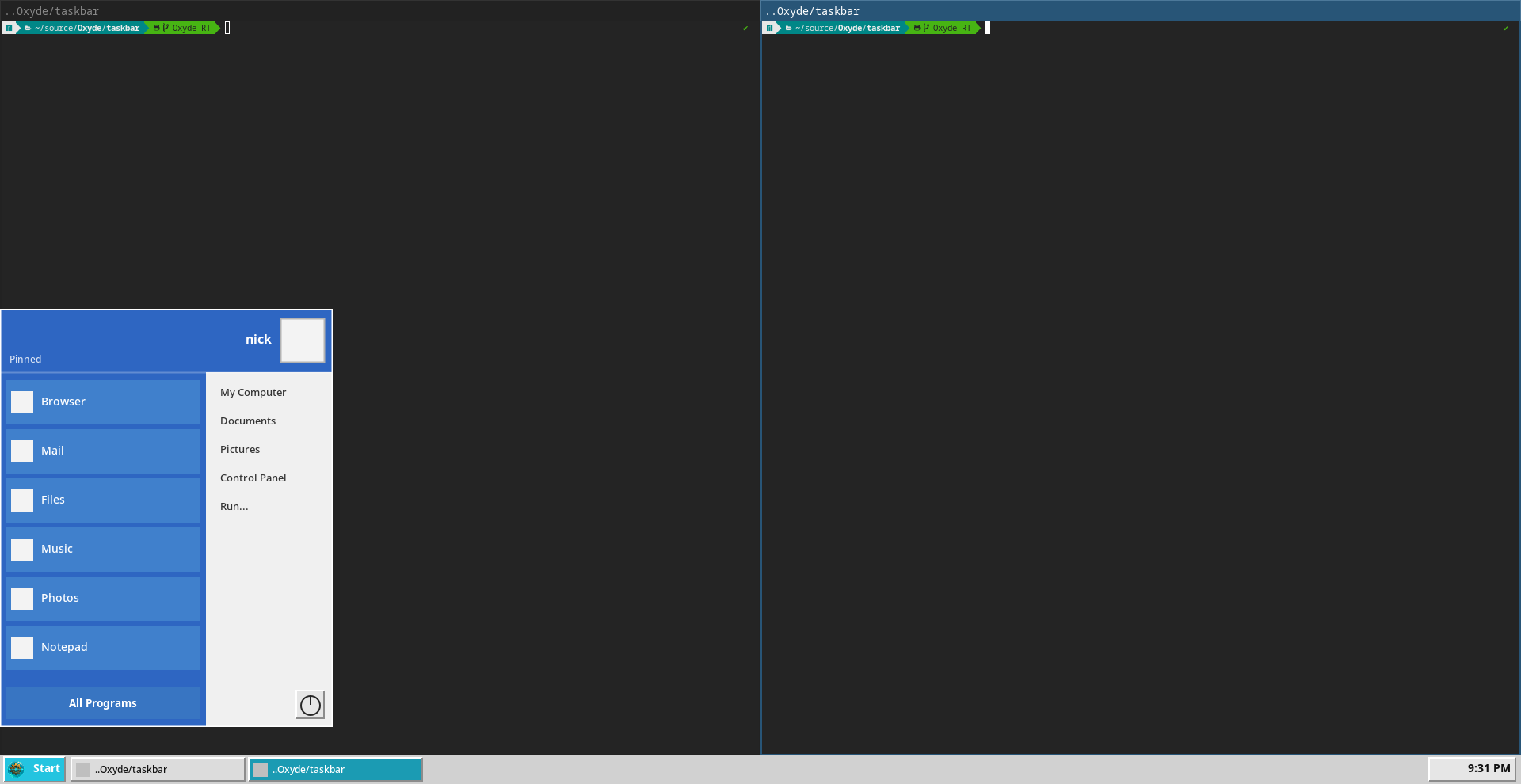
Latest development screenshot (09/24/2025):

Oxyde Desktop Screenshot 09/24/2025

Captured from Oxyde-Y2K build – showing early taskbar and start menu.

Architecture Snapshot
  • Core: Rust
  • Compositor: custom, optimized for low RAM usage
  • Shell: classic taskbar + start/app drawer
  • Apps: file manager & tools (C/C++ for that retro coding vibe)

Note: Exact backends and modules are evolving with pre-alpha work.

System Requirements (Early Draft)
  • Modern x86-64 CPU (2 cores+ recommended)
  • 4 GB RAM (works on less; goal is <1 GB for desktop + compositor)
  • Basic 3D-capable GPU

These will be refined as builds mature.

Changelog
  • Oct 2025 — Started sourcing and working on icons.
  • Oct 2025 — Coded rust compositor.
  • Oct 2025 — Taskbar polish.
  • Sep 2025 — Early app drawer & task buttons wired; animations pass 1.
  • Aug 2025 — Compositor prototype online; initial Aqua gradient study.
Detailed release notes will accompany pre-alpha builds.
© 2003–2025 Oxy2K • HTML 4.01 Transitional Return to Home